One more from Paris

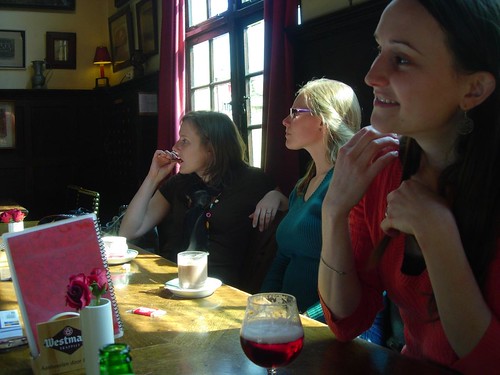
This is a nice photo of E. and me at a restaurant in Paris that I swiped off of Facebook.

And finally, Paris

Our trip to Belgium and France is already becoming sort of a fuzzy memory, so it's time to wrap this up.

The final stop of our tour was Paris.  I have visited Paris many times, but I had not done so in nearly ten years.  I enjoyed seeing the city again, but also didn't feel compelled to do and see everything.  The weather was impeccable--perfect for meandering.

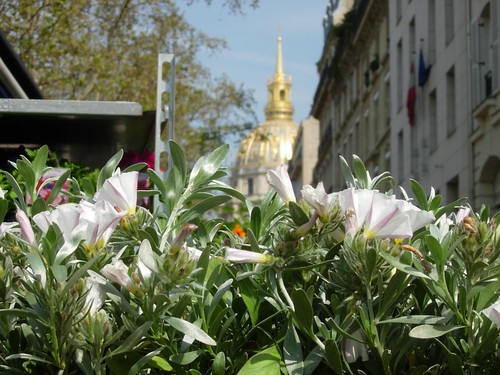
Les Invalides

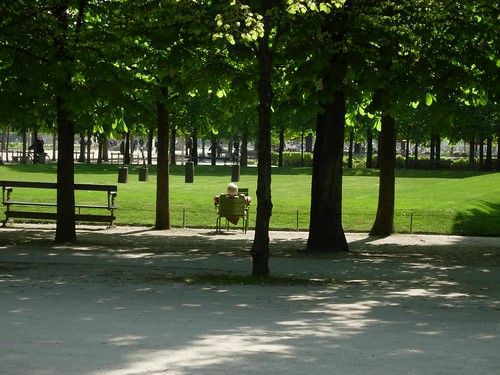
Jardins des Tuileries

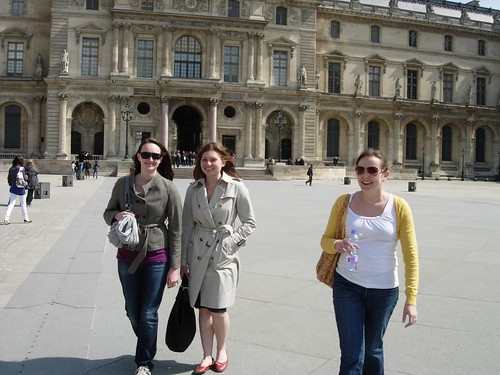
Christina, Bonnie, and Lauren by the Louvre

Lauren and Christina at the Museum of Decorative Arts

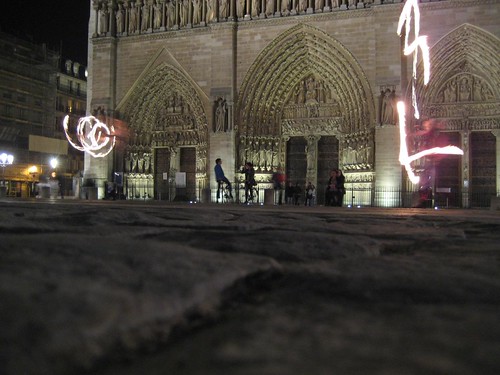
Notre Dame

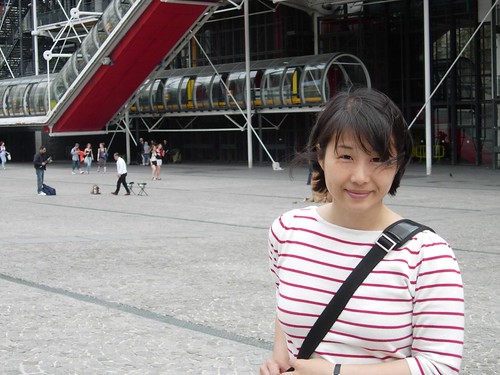
My lovely E.by the Pompidou

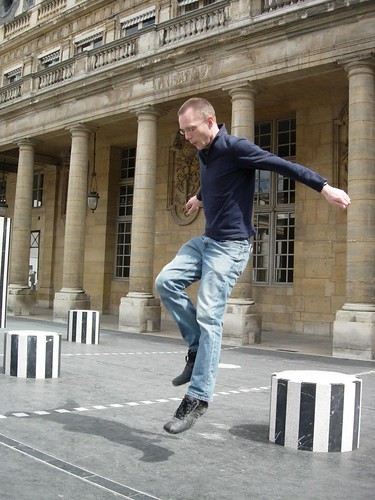
Palais Royal

A day in Alsatian wine country

Whoever you are, I have always depended on the kindness of strangers.
--Blanche DuBois, A Streetcar Named Desire


This is a story about happy accidents.  During a biking tour of Strasbourg our Bosch group leader pointed out an  art nouveau style building.  Stasbourg, she noted doesn't have many fantastic examples of the style.  For the good stuff you need to hop on a train and go to Nancy.  Fellow Bosch spouse Christina is a great fan of all things art nouveau or Jugendstil, and she and I were quickly plotting an excursion to Nancy.  (Nancy is on the UNESCO World Heritage Site list and in all seriousness, that list has never let me down.)

The next morning, we made it as far as the ticket line at the train station, when we concluded that we were never going to make it to the train.  Down but not out, we gathered train schedules and stopped at a tourist information desk, where Christina made inquiries about venturing into Alsatian wine country.  We regrouped. We recruited Bosch spouse Lauren to join us.  And we hopped on a train headed for Obernai.

Outside the Obernai train station we stood in front of a map of the small town, getting our bearings.  A bearded man in a suit approached us and asked us if he could be of assistance.  No, no, we're just figuring out where things are, we replied.  By the way, he says, I'm going to be helping a friend out at a private wine sale at his vineyard later in the day, and would you care to join me?  We'll meet by the belfry at such-and-such an hour.

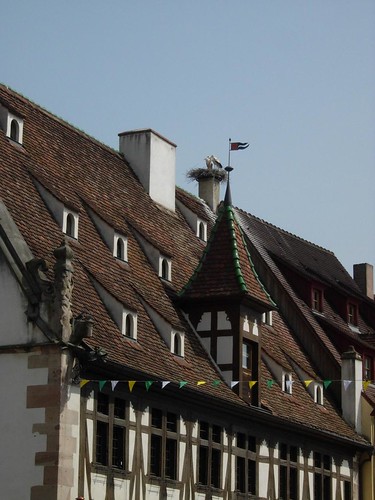
Christina, Lauren and I wandered Obernai, which would be sleepy on a busy day, and was extra sleepy on Monday, which the Germans would call Ruhetag, the day local businesses take a day off.  We had some lunch, took photos of the white storks nesting on the roof of the granary (halle des bles), and met our new friend,  Claude Mitschek, at the appointed hour by the belfry.


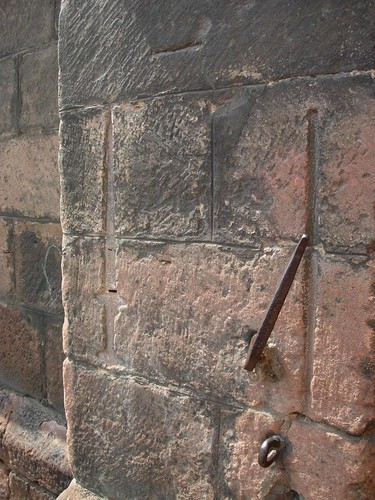
Before we leave, he says to us, I should like to show you some of the sights of the town.  Obernai is a small place, so this amounts to walking us around the block.  He showed us an unusual well, details on the renaissance town hall, the storks (local mascots to be sure), and this interesting spot on the wall of the belfry:


On the left, if you look closely, you'll see the outline of a short sword.  To keep the peace, this was the maximum length of swords allowed at market.  The metal hook was where unfaithful wives were tied to be taunted.  And the line on the right was a standard measure (approximately, the distance from the elbow to the hand).

At this point fellow explorer Lauren bowed out of the afternoon excursion, but Christina and I hopped in our guide's car.  Our destination was Barr, another little village up the road.


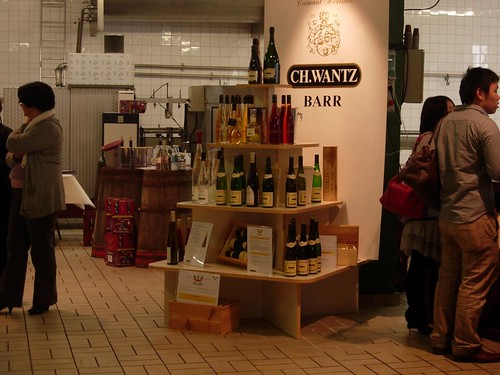
There, as promised, we found ourselves at a private wine tasting for commercial buyers.


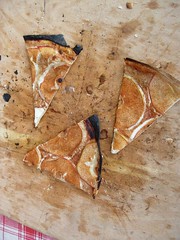
Our host started us on some wines, but  when some people who looked like more serious buyers approached, Christina and I made a point of it to stay out of the way.  Not long after someone offered us a private tour of the cellars.  And so after a quick snack of Flammkuchen...


... we went off to learn everything about wine production: how much a bucket of grapes weighs, how to keep the grape varieties separate, how to stomp the grapes (with a giant inflatable balloon, in essence), why you have to keep air out of the casks, how nice it is to be able to hose out the inside of a metal cask, and on an on.  Our extremely affable guide was, we think, shirking some other duty by spending time showing us around.  He mostly spoke in small bursts, which I would do my best to translate for Christine, and I think we got the gist of almost everything.


Incidentally, at the end of our tour we walked through the distribution center, and I will surely never see so much wine again.  Think of the scene at the end of Raiders of the Lost Ark--the warehouse full of crates--and you're not far off.

We bought some wine--it was the very least we could do--and made our way back to Strasbourg.  We had a grand day out.

P.S.  Needless to say, we recommend the fine wines by Ch. WANTZ.
.

Strasbourg

The next stop on our tour was Strasbourg, France, which is absolutely one of the most appealing cities I have ever visited.  I genuinely had no idea, and in fact, Strasbourg had barely been part of my consciousness prior to this trip.
One strange twist was that a volcano had recently erupted in Iceland, disrupting air traffic across Europe.  Someone from the Bosch foundation found herself stranded in Brussels.  Our group leader therefore drove her to Germany so she could catch a train.  An amusing consequence of this situation is that as the best French speaker in the group, I was designated to communicate with the drivers of the bus taking us from Brussels to Strasbourg.

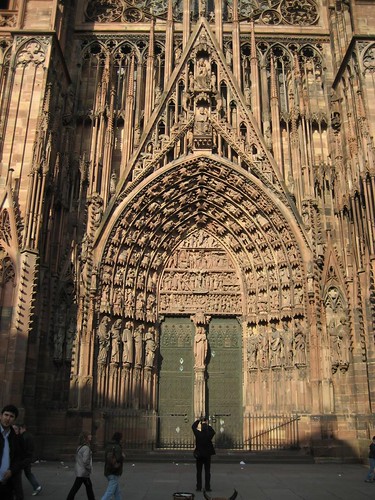
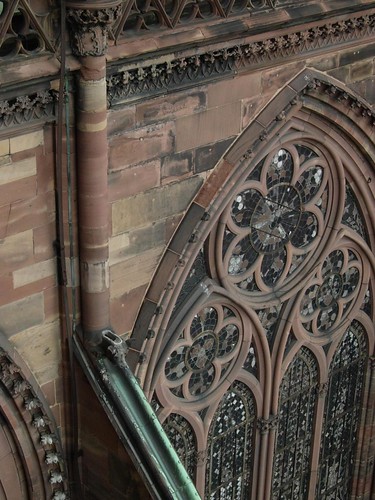
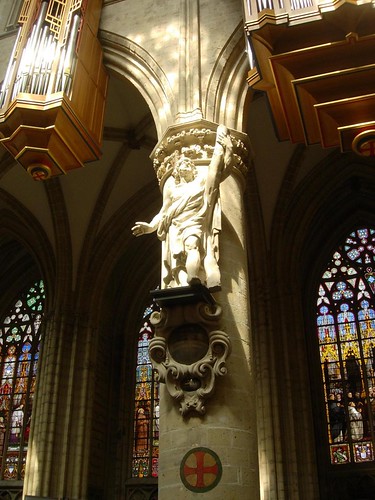
The architectural highlight of Strasbourg is the cathedral, an exuberantly gothic concoction.


For aficionados, much of the stained glass is original.


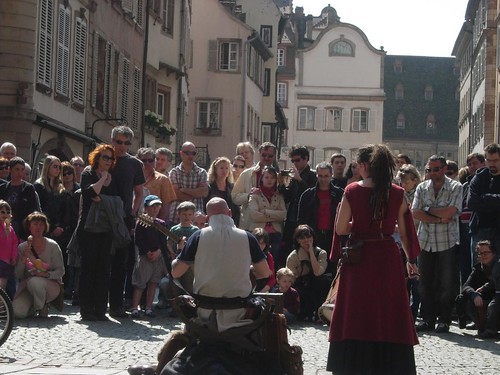
The square in front of the cathedral attracts street performers.  This burly man sang renaissance-era music in an amazing falsetto.

From on top of the cathedral, you get a great view of the old town.

Bruges

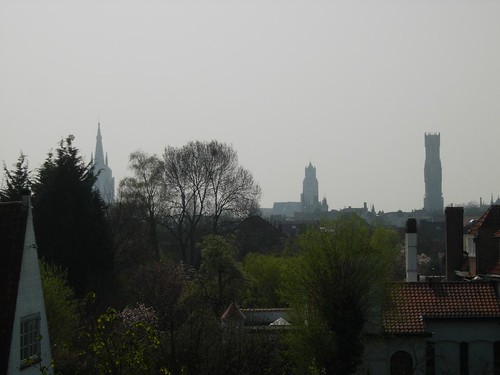
The fate of a Bosch spouse is to pass the time while the fellows are tied up.  Five days is kind of a long time to spend in Brussels as a tourist so on day three an expeditionary party consisting of four Bosch spouses, one Bosch significant other, and also a DAAD fellow and his spouse set off to visit Bruges.


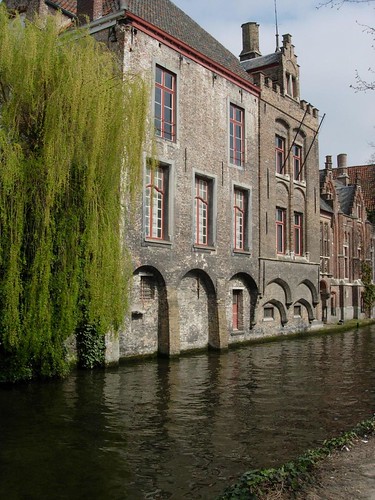
Often described as touristy (true), Bruges is nevertheless one of the most appealing cities in Europe to visit.  The canals remind you a bit of Venice or Amsterdam, though Bruges cleaner, quainter, and quieter than either of those cities.


Brussels

We're back in Bonn after another Bosch seminar trip.  Our bags are unpacked, there is food in the fridge again, and it is time for a recap.  We were on the road for two weeks this time, visiting Brussels, Strasbourg, and Paris.

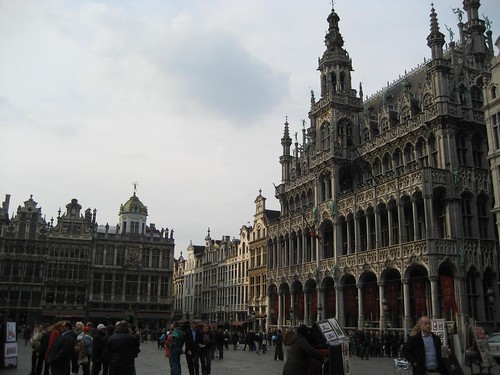
I'd been through Brussels before, but I had never spent spent days there previously.  The city strikes me now as a pleasant mishmash of urban personalities.  Its iconic space is the grand place, lined on all sides by imposing facades, including the gothic town hall, and a good many gold-encrusted guild halls.


Having seen many German cities, the old town in Brussels looks decidedly run down.  The cobblestone streets are so uneven one wonders if anyone is taking care of them; many walls are dirty or crumbling; and a surprising number of storefronts are vacant for a place overrun with tourists.

We like to live here.  The cars smell good. We like to die.  

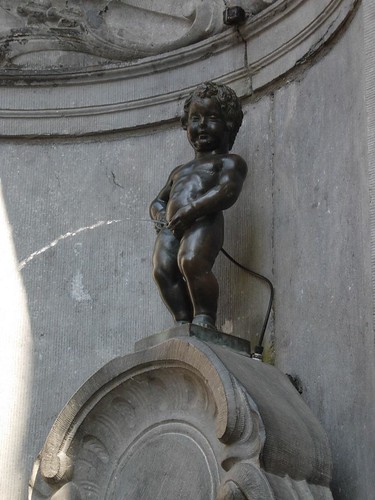
It tells you something about the locals that their mascot is a statue of a pissing boy, the Manneken Pis.  If the city looks a bit shabby (despite its obvious EU-generated wealth) then too bad.


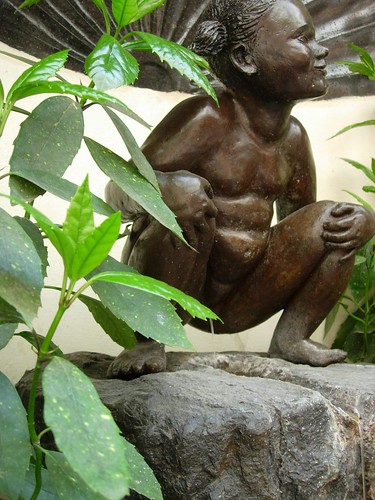
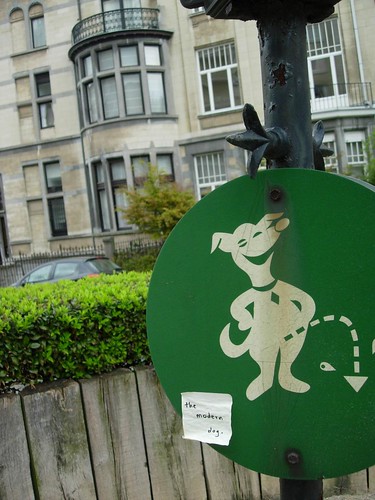
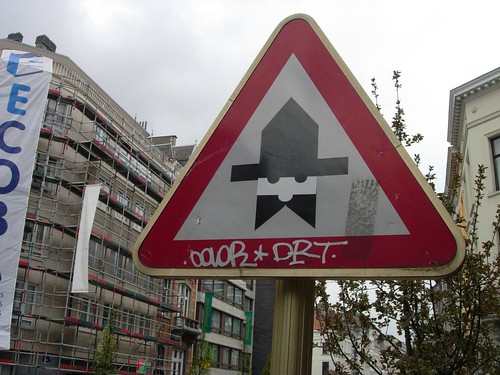
Manneken Pis is, naturally, reproduced ad nauseam as a tourist knickknack, and is also the inspiration for what a copyright lawyer would call derivative works, such as a statue of a pissing girl, Jeanneke Pis, and signs depicting a pissing dog, which indicate designated dog toilets.


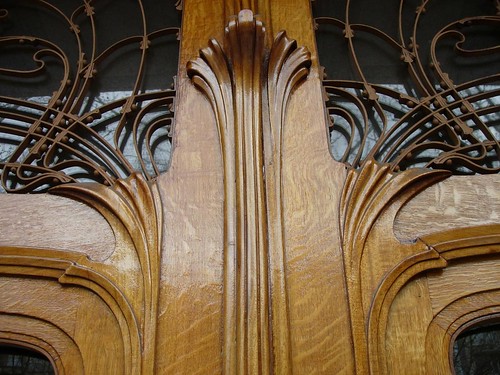
Especially south and a bit east of the city center, one encounters a number of art nouveau buildings. As with the rest of the city, they are frequently dirty and shabby, despite their inherent elegance.   I took myself on a tour, but E. took a guided tour, and the guide pointed out that in fact many of the buildings are in bad shape, and that there are few craftsmen capable of maintaining them properly.  Having seen analogous buildings in Vienna, Paris, and even Chicago, I do have to conclude that Brussels art nouveau is underwhelming.


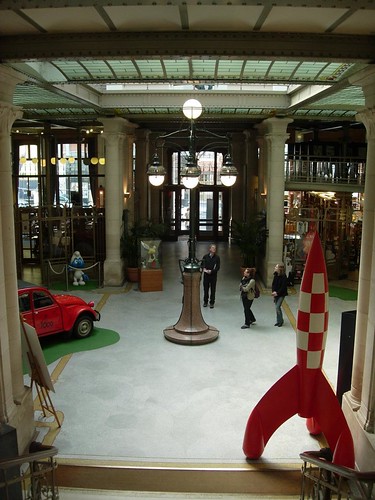
I realize I am alone in my odd enthusiasm, but one of the really great things about Brussels is that it is the undisputed capital of the French-language comic book (Tintin, Asterix, etc.).  Contributing to the city's funky feel, there are many murals celebrating comic book illustration.  In this one, you look down from an imaginary position in the sky at the place where you are standing, except that where you are really standing is a river (and it would be, except that the rivers have all been chased underground).


The Belgian Comic Strip Center is a museum devoted to comics, particularly of the francophone kind.  It is housed in a building designed by Victor Horta, the best known art nouveau architect of Brussels.


My impression of Brussels from this trip is disjointed.  Some of it is lovely.


Some of it could use a good scrub and some competent urban planning.  And I take it I should keep an eye out for bandits ahead.

Our Star for Oslo


The television offerings in Germany are awful in too many ways to describe. Throughout the year I have been amazed that the channel I watch most consistently is VIVA, a video channel similar to MTV. I don't have the German medical or legal terminology to watch House or Law and Order dubbed, and I have no patience for the dozens of regionally produced (i.e. PBS-style) Stammtisch programs, where people sit around and talk.

This spring I briefly fell under the spell of Deutschland Sucht den Superstar, Germany's version of American Idol (which is amazing in part because I would never, ever waste my time on Idol). In a similar vein but more to the point, I completely succumbed to Unser Star für Oslo (Our Star for Oslo).

The Eurovision Song Contest, for those who don't know, is an annual event televised all across Europe. Established in 1956 as an experiment in simultaneous transmission, the contest has become a European cultural phenomenon. The reason for this, I think, is that it is the only time in the year when everyone in Europe can turn on the television and watch what everyone else is watching.

As Americans, I think we have no idea how tantalizing this premise is. Culture critics complain that since Cronkite and Carson went off the air we no longer have shared mediated experiences. It may be true that we now live in a world with 57 channels and nothing on, but the fact remains that day after day, people in Idaho, Iowa, Alabama, Alaska, Maine, and Michigan all watch exactly the same programs on television. Now imagine a world in which each state speaks its own language, and has its own television networks, and in which there are only two hours a year when people in all 50 states watch the same thing at the same time. That's pretty much what the situation in Europe is.

The Eurovision Song Contest is like a cross between American Idol and the Olympics. It's like the former because it entails picking a wining performer. It's like the latter because national pride is at stake.

Each country selects a contestant for the contest as it sees fit. Our Star for Oslo is Germany's selection process. (Oslo is where the contest takes place this year.) This television program is roughly like American Idol: singers perform, judges critique, viewers vote, contestants are eliminated.

By the final program, there were just two contestants left, and somewhere around the middle of the broadcast, things got interesting. The judges' attention shifted from the contestants' performances to the larger issue of winning the Eurovision Song Contest. The winner, they observed, is usually a perky, happy song (ABBA won the song contest with "Waterloo," back in the day). This was the judges' oblique way of saying that the very talented rock vocalist on stage might not be the right gladiator to send into the circus.

Poor Germany hasn't won the Song Contest since 1982. They're seldom in the top ten even. (In the last five years they were 20th, 23rd, 19th, 14th, and 24th. If this were baseball they'd be the Cubs.) So when you think of Our Star for Oslo, think of American Idol with an extra element of we want blood.

Germany's winner this year is Lena Meyer-Landrut, who is quite good despite her inexperience (she's not even through with high school). The winning song is "Satellite," though I think her best performances were some of the other pieces she sang on the show.


When the judges veered into thinking about how to win in Oslo--well, that's where it gets interesting. One judge expressed sadness that the winning song, whatever it might be, would be in English. German or English, that is the question. German may represent Germany better in such a competition, but English sells.

And then there's the messy matter of "European" taste. They put up video clips of some of the competition. The styles and tastes represented couldn't be any less similar. Consider Holland (dreadful), Ireland (all that musical talent, and this is what they come up with?), Norway (popera), and Slovenia (I guess they love this in Ljubljana).

All in all, Eurovision is a healthy reminder that regardless of the state of European unification, the Europeans are still strangers to one another. I didn't invent this thought, but I think this is essentially correct: The only culture Europeans share is American pop culture. No wonder the victory-hungry Germans picked a song in English.